
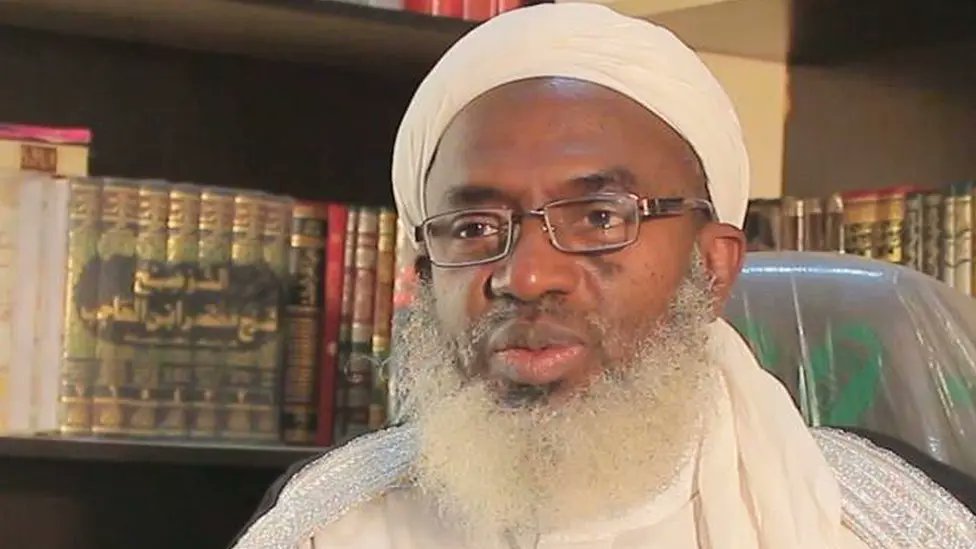
Ever since I’ve read Ahmadu Bello Sardauna’s My Life and Abubakar Mahmud Gummi’s Where I Stand, this question has been on my mind for quite a while, but I couldn’t muster the courage to write about it. At first, I was hesitant to write about the topic because it seemed unimportant and felt as if I were merely pointing a finger at a person for leaving out the other in his book.
But upon reflecting on my hesitation, I felt compelled to write about it, if only to admonish myself and others about how to handle, approach or deal with issues of this nature when we come across it, especially when conducting comparative analysis or what have you.
As a reader, the title of the article might lead you to think the answer will be made clear, and by the time you get to the end of this piece, you will be satisfied with a convincing conclusion about why Gummi’s name hasn’t found its place in the Sardauna’s book, even once, despite the contributions he has made in the latter’s life especially during his time as the premier of the northern region. Some of these contributions were mentioned by Gummi himself in his book, and it’s obvious. He made it clear at one point that he “was the closest adviser to the Sardauna on religious matters”. It’s worth noting that Gummi had mentioned the Sardauna many times in Where I Stand. In fact a simple search of the word “Sardaunda” through the pdf file greets you with about 126 results pointing to the mention of the former premier, and “Ahmadu Bello”, which brings out about 20 results. It tells you a lot about their bond.
Also, their strong connection was evident in what followed the Sardauna’s assassination. At that defining moment, the true depth of the scholar’s bond with the premier was also revealed, in that the scholar was accused of a serious crime by the coup leader, namely Nzeogwu Kaduna and co. They shamelessly and falsely claimed that he helped the Sardauna plan a war against the non Muslims and that they imported weapons from the Middle East. Gummi firmly denied the false accusations by stating that, “I had never known him to have discussed war in Nigeria, much less purchase weapons.”
The bottom line here is that, had Gummi not held a significant place in Sardauna’s life, he would not have been drawn into the situation or subjected to such serious and unfounded accusations. Someone else would have been targeted by the coup leaders. I’m pretty sure it was their tight relationship that triggered the accusations.
But then again sometimes I even ask myself, is this discussion even necessary? What benefits does it stand to gain? Well, since it has nothing to do with finding fault in any of the two characters in this piece, but rather a genuine curiosity to explore the benefits of doubt within the situation, perhaps we might begin to see it differently, in which case we arrive at a fairer understanding of the reason behind the omission.
If anything, this phenomenon is by no means new within the research ecosystem, it was also evident among our early Islamic scholars. For instance, although Imam Muslim held Imam al-Bukhari in the highest regard, loved him deeply, and even defended him against his critics, yet, interestingly, he did not narrate any hadith from him directly in his Sahih. For instance, a statement along the lines of, “Muhammad ibn Ismail reported to us from so-and-so…” was never recorded. If someone in that era had suggested Bukhari would be left out of the second most authentic Hadith collection, people would have just been deeply skeptical. But yes it happened and nothing could deny it. I’ll limit myself to one example to avoid lengthening the article.
Nevertheless, I would try as much as possible to come up with some suggestions that would hint at the fact that the omission could have a legitimate explanation. It’s left to the reader to decide which of the excuses I’d mention best fit their own interpretation or conviction.
First of all, it is probably not unconnected with one of the Islamic scholars’ personality traits, especially people of Gummi’s caliber. This trait is nothing but humility. What one of my friends Arc. Muhammad Nda suggested when I was telling them about my intention to write about this was-and it could be right or wrong-that maybe Gummi personally requested from Sardauna to omit him in his biography out of sheer humility. This practically seems to make a lot of sense, but is his suggestion really plausible enough to be accepted? Well I don’t think so, because the assumption is somewhat self-defeating, since Gummi himself narrated stories about some of the contributions he has made in his book Where I Stand. If he doesn’t want his contributions to be mentioned in someone else’s book, I doubt he would bother writing about them in his own book. But yes I may agree that he requested to be left out based on certain pretext other than this. Either way, this shouldn’t be taken as disagreement with my friend’s suggestion, his argument could be valid. By the way I’m merely examining different valid viewpoints without drawing any conclusions.
Secondly, the omission might be as a result of editorial decisions. For instance, the book probably isn’t aimed to cover scholarly or religious issues, or probably page limits might have forced difficult choices about whom to include and who to leave out. Another editorial concern might be the potential for disruption of the narrative structure. So in this sense, the book’s flow or readability might be injured, considering the fact that the main character is of political background rather than a religious scholar. What’s more, maybe the targeted audience are not meant to get immersed in anything outside politics. It could stem from one of these editorial concerns.
Although the premier had discussed religious issues early in his book, how they learnt the Quran and what have you, he probably didn’t cross paths with Gummi at that point, which could explain Gummi’s exclusion from the discussion.
Thirdly, the reason could be that of a political consideration, the Premier himself probably tried to keep religious figures out of the political memoir. For one, he probably doesn’t want to implicate religious scholars of Gummi’s caliber, as such he honorably omitted him from the book. For another, maybe he felt that he is better off shielding the scholar from political backlash than subjecting him into one, through mentioning the contributions he made during their time together.
Fourthly, it’s also possible that none of the explanations mentioned above apply. Perhaps it was simply a case of memory oversight. After all, human error can cause even the most important things to slip from our minds, and we may all have experienced something similar at some point. It’s something engraved in our flesh. You can hardly escape it.
In any case, omitting Gummi in the book would neither in any way affect his dignity and scholarly credibility nor in any way paint the Sardauna black. As I mentioned earlier, this is a mere discussion about how we should view things and never to judge actions of others. You may have noticed that I have come up with diverse excuses, which are expected to be applied when dealing with people’s actions of this nature.
You could run into a topic different from this one, but you are expected to work along this line of reasoning, by yet constructing positive excuses for authors, especially religious ones. In moments like these, you don’t just jump to conclusions claiming that Mr. A does not like Mr. B hence why he deliberately chose to leave him out of any discussion in his book. Or start claiming that they part ways with each other, and that they are no longer on good terms, so they took those uncomfortable decisions against each other. Dhannu bil mu’minina khaira.
It’d be unfair of anyone to arrive at any conclusion of that sort without any indisputable evidence. In fact even with indisputable evidence, you have no business meddling in people’s affairs. I hope I’m also not meddling in their affairs.